a
News
Future-Proofing Bali Villas Through Adaptive Steel Engineering
Building for Long-Term Flexibility
Real estate in Bali is dynamic. Market preferences shift, rental demands evolve, and owners often adapt properties for new functions over time.
Rigid construction systems limit modification. Structural walls and monolithic slabs make reconfiguration costly and invasive.
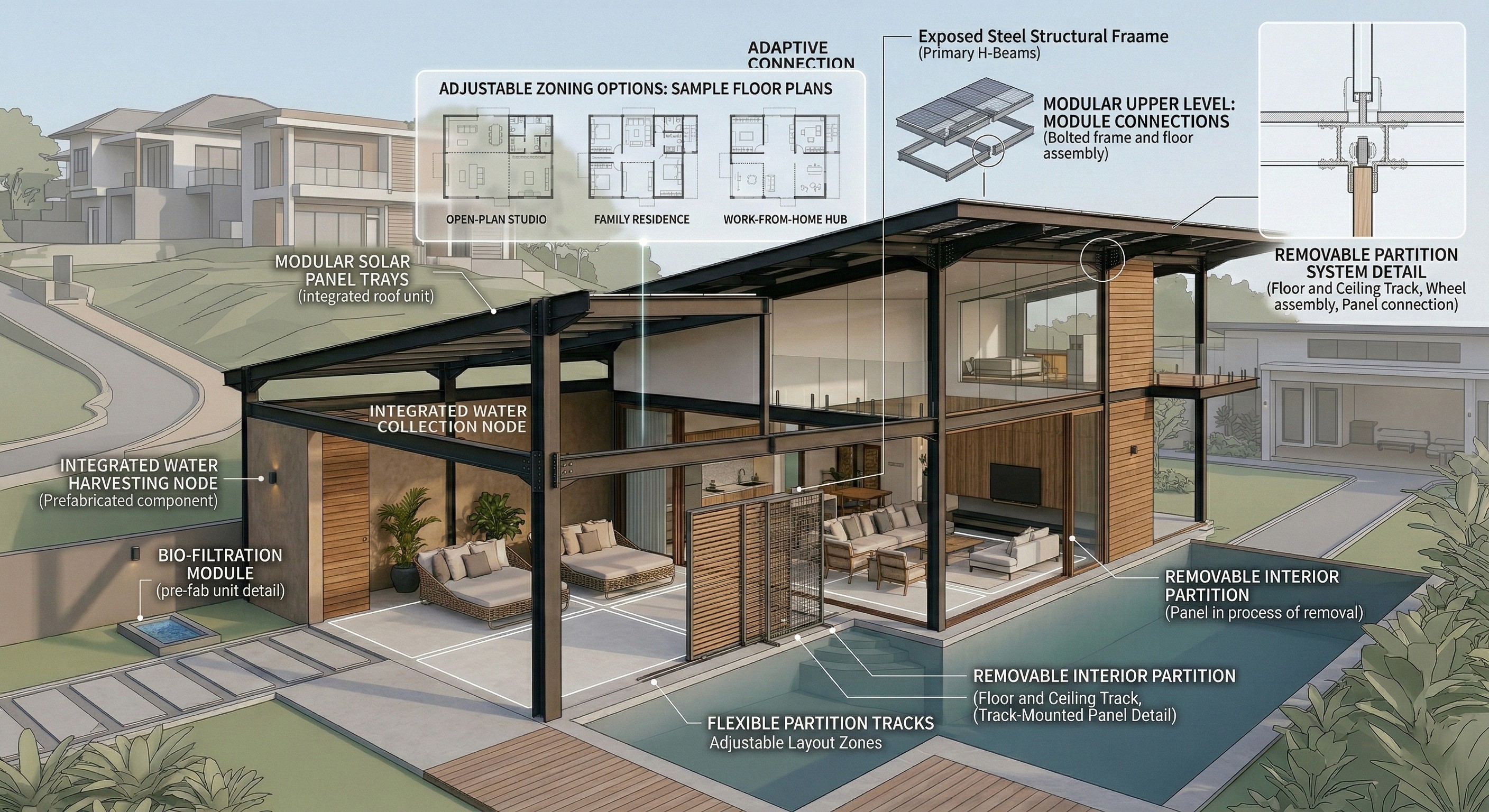
Steel-based engineering introduces adaptability. Open-span layouts and non-load-bearing internal partitions allow interior redesign without structural compromise.
The ability to modify, expand, or repurpose a villa significantly increases long-term asset value.
Future-proofing is not about prediction — it is about flexibility.
Structural flexibility protects long-term investment.
“A villa should adapt as fast as the market changes.”
Strategic Value of Adaptive Construction
Adaptive engineering allows developers to respond to shifting market expectations without structural demolition.
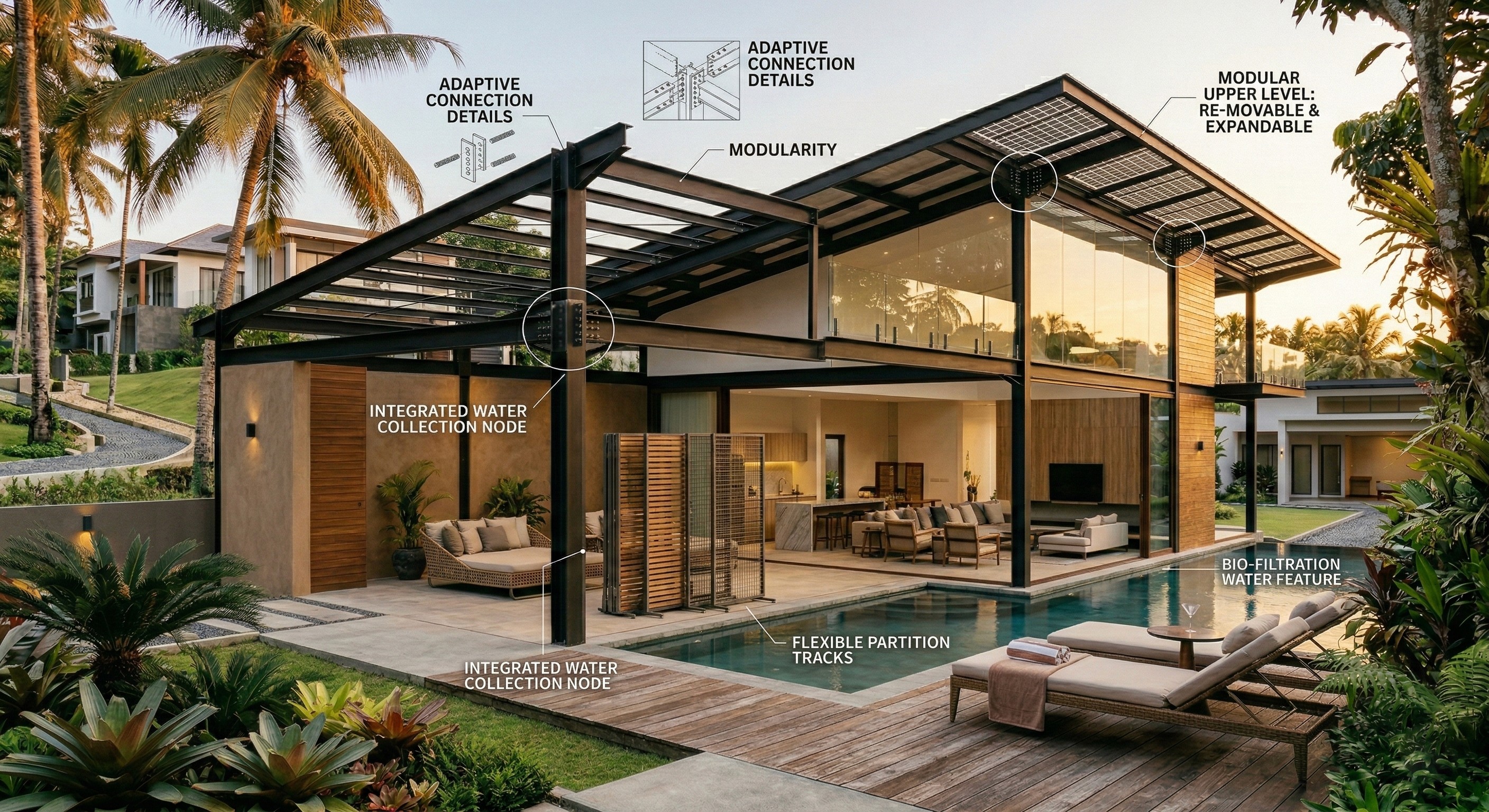
Open structural grids enable easy conversion between rental layouts — from one-bedroom luxury units to multi-suite family configurations.
Interior partition systems can be relocated without affecting load-bearing stability. This reduces renovation cost and minimizes downtime between rental cycles.
Steel structures also support vertical expansion planning. Foundations and primary frames can be engineered for potential second-story additions, protecting future development rights.
From an investor perspective, adaptability enhances resale value. Buyers recognize flexibility as risk mitigation — the property can respond to new trends, co-living concepts, wellness layouts, or hybrid residential-commercial use.
Maintenance access is also simplified. Exposed yet protected structural systems allow inspection and reinforcement upgrades if required, extending asset lifespan.
Long-term benefits include:
Reduced renovation cost
Higher resale liquidity
Market repositioning capability
Improved structural lifespan
Sustainable lifecycle performance
Future-proofing is an investment philosophy embedded in structural design.
Technological Points — Engineering Framework Behind Adaptability
Modular steel grids provide consistent spacing that supports interchangeable wall systems.
Bolted connection systems allow disassembly and reconfiguration without structural damage — unlike cast concrete joints.
Load-bearing perimeter frames transfer structural stress externally, freeing interior space from permanent structural walls.
Digital Building Information Modeling (BIM) archives allow precise documentation of structural capacity. Future modifications can be calculated accurately using original engineering data.
Corrosion-protected steel systems designed for tropical climates ensure durability even when structural components remain partially exposed.
Smart integration capability enables later installation of automation systems, energy upgrades, or photovoltaic structures without structural reinforcement redesign.
Adaptive engineering ensures the villa remains structurally relevant beyond initial construction.