a
News
Transitioning from Concrete to Steel in Tropical Villa Construction
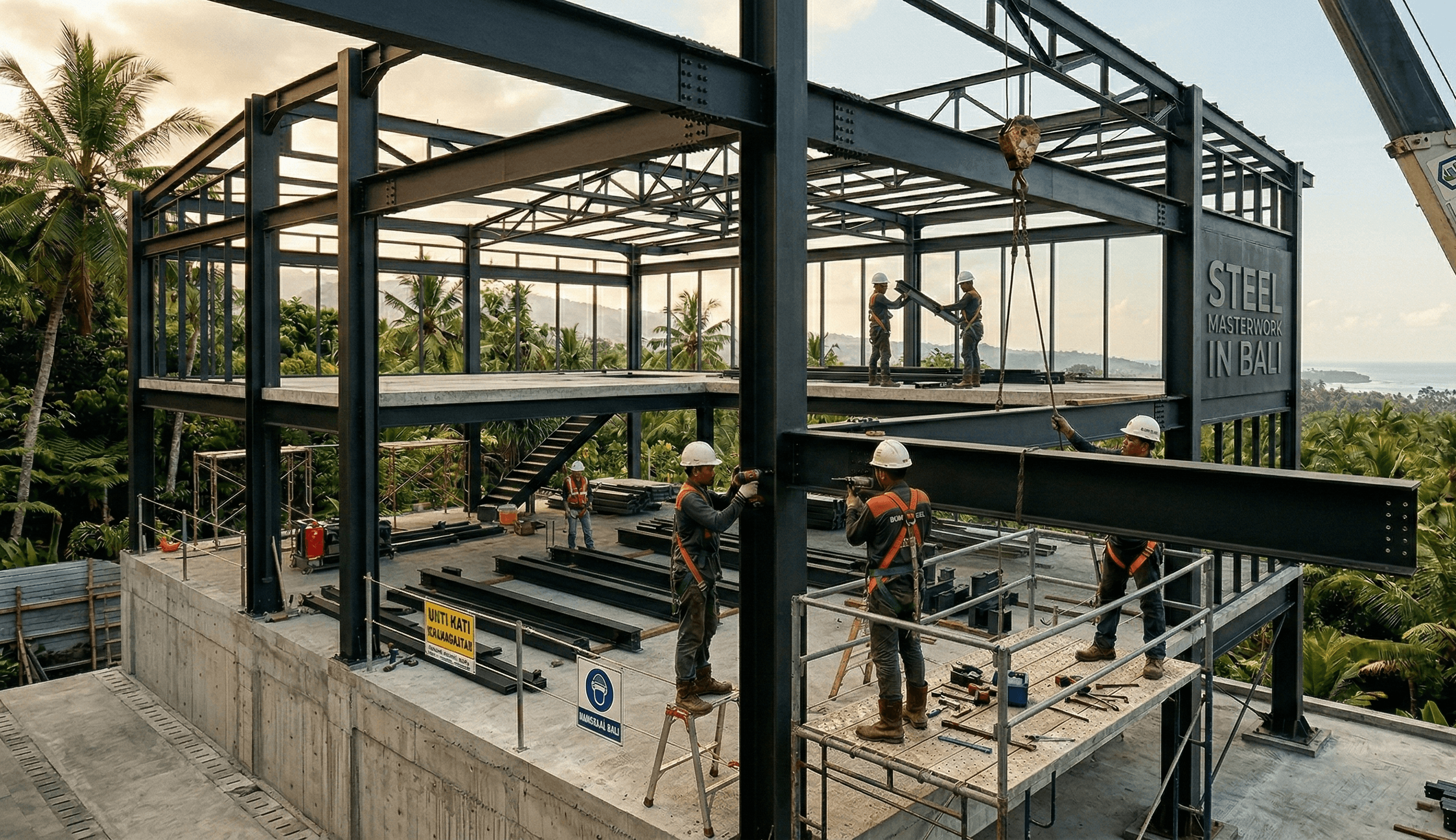
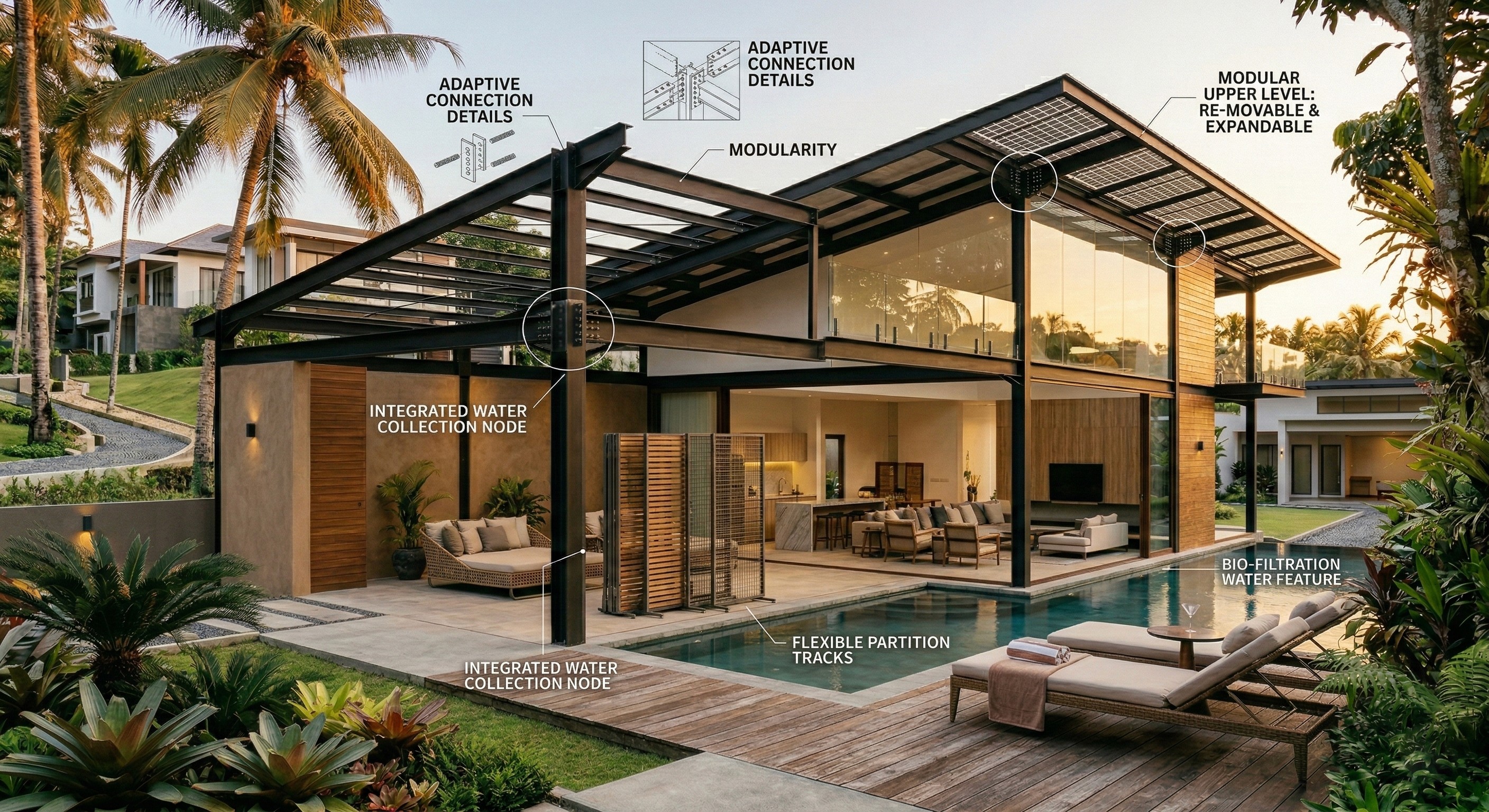
Concrete has traditionally been considered the default structural material in residential construction across Southeast Asia. While it remains widely used, evolving architectural demands — especially in Bali’s luxury villa segment — are exposing its limitations. Modern tropical design prioritizes panoramic openings, seamless indoor-outdoor transitions, and minimal structural interruption.
Heavy concrete systems often require thicker columns, increased foundation mass, and longer curing timelines. In contrast, engineered steel structures allow longer unsupported spans and reduced overall structural weight.
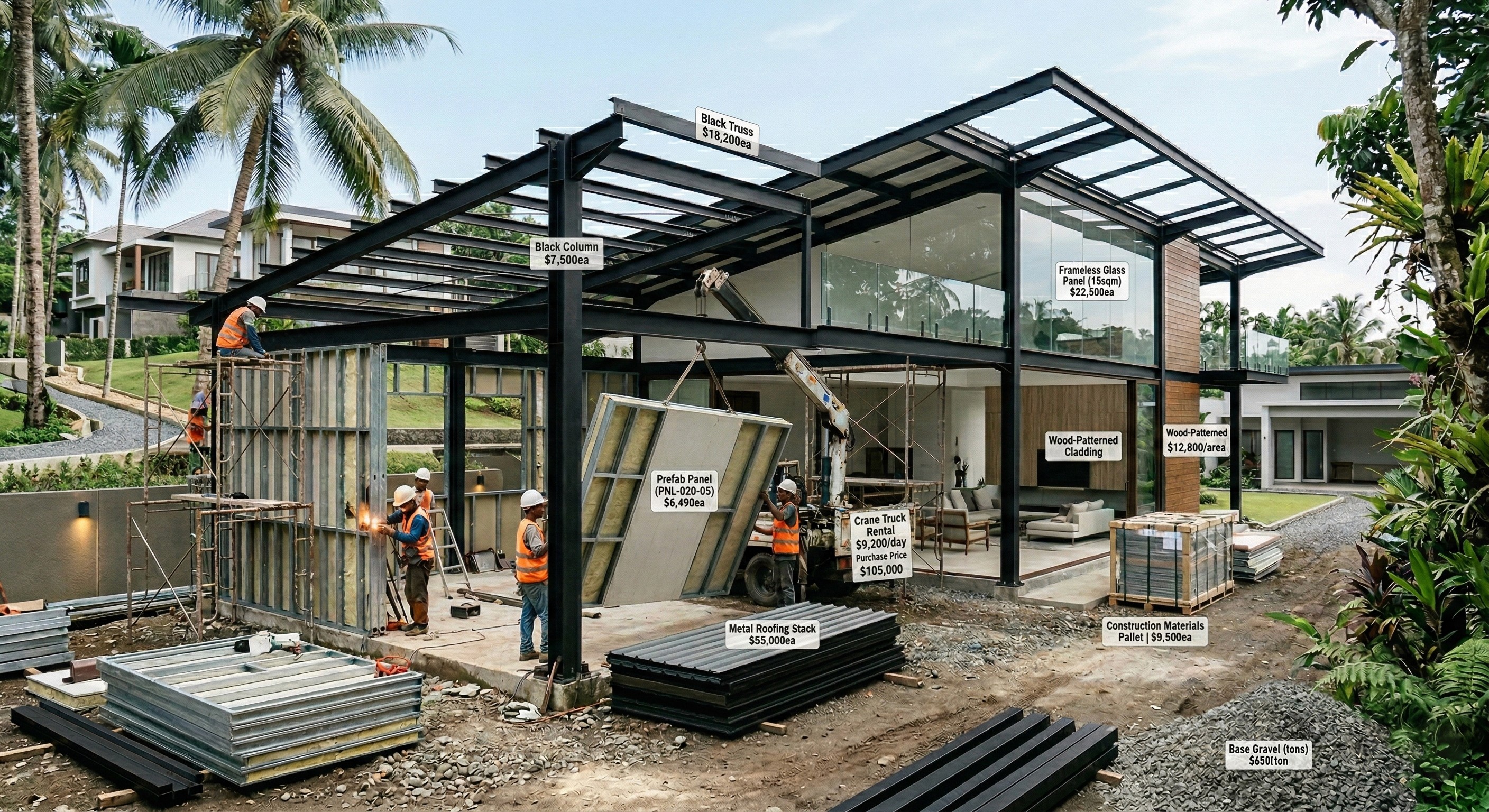
In humid climates, reducing construction duration is not merely a matter of efficiency — it directly impacts material integrity and site control. The integration of prefabricated steel components introduces measurable precision, minimizing corrective finishing and structural inconsistencies.
As architectural expectations evolve, structural logic must evolve with them.
Why Structural Method Matters in Tropical Development
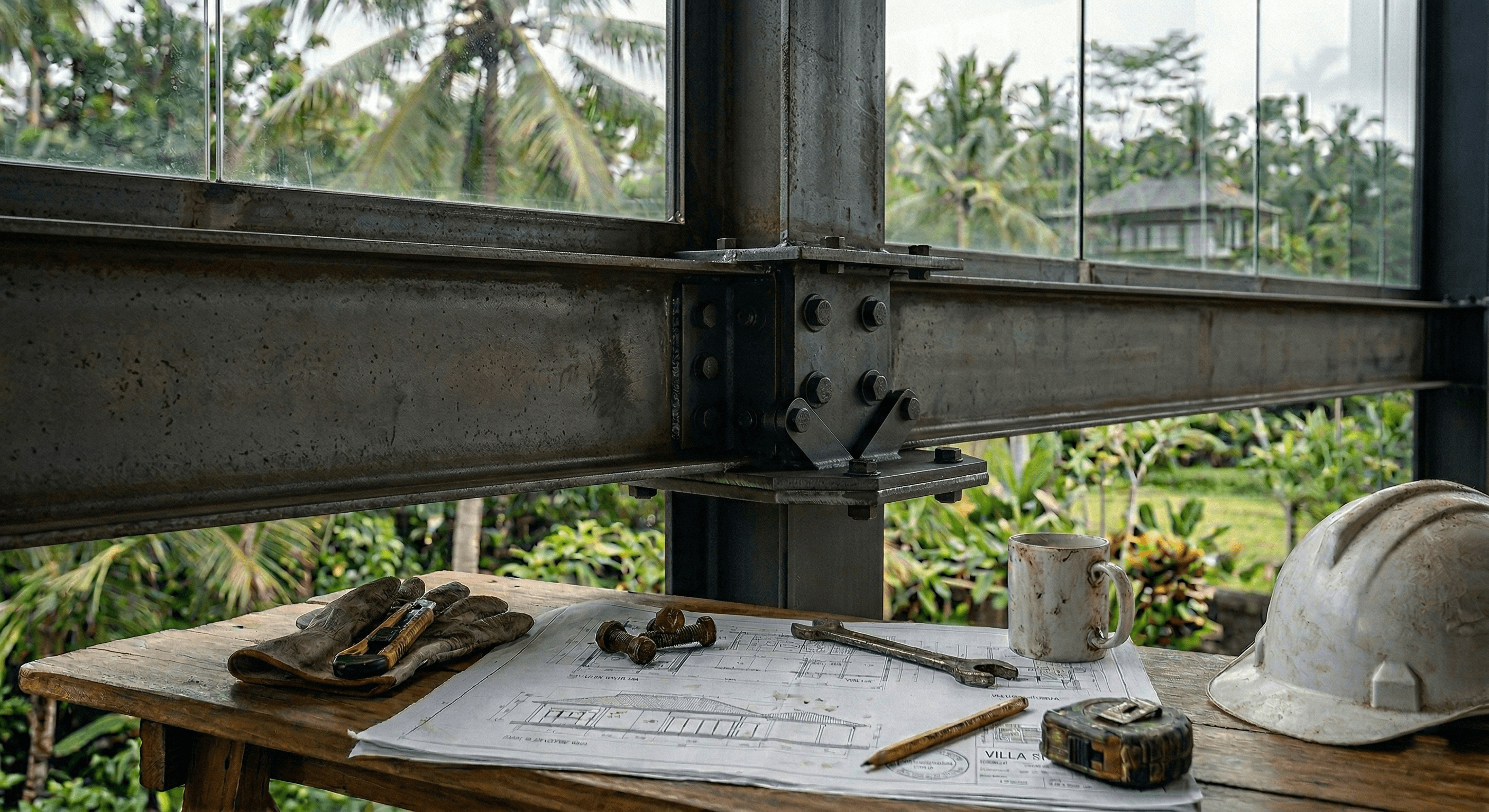
Precision-engineered steel joints improve structural reliability while accelerating on-site assembly.
“When architecture becomes lighter, structure must become smarter.”
Structural Advantages of Steel Systems
Allows longer spans without intermediate load-bearing walls
Reduces total structural weight and foundation demand
Shortens active construction timeline due to dry assembly process
Minimizes structural cracking associated with curing inconsistencies
Enables better dimensional accuracy in architectural execution
Engineering & Fabrication Considerations
Off-site prefabrication under controlled conditions
CNC precision cutting and welding processes
Galvanized or protected steel for humid tropical climates
Bolted connection systems for faster structural assembly
Integration compatibility with modern façade and glazing systems