a
News
Engineering Wide-Span Open Layouts with Steel Systems
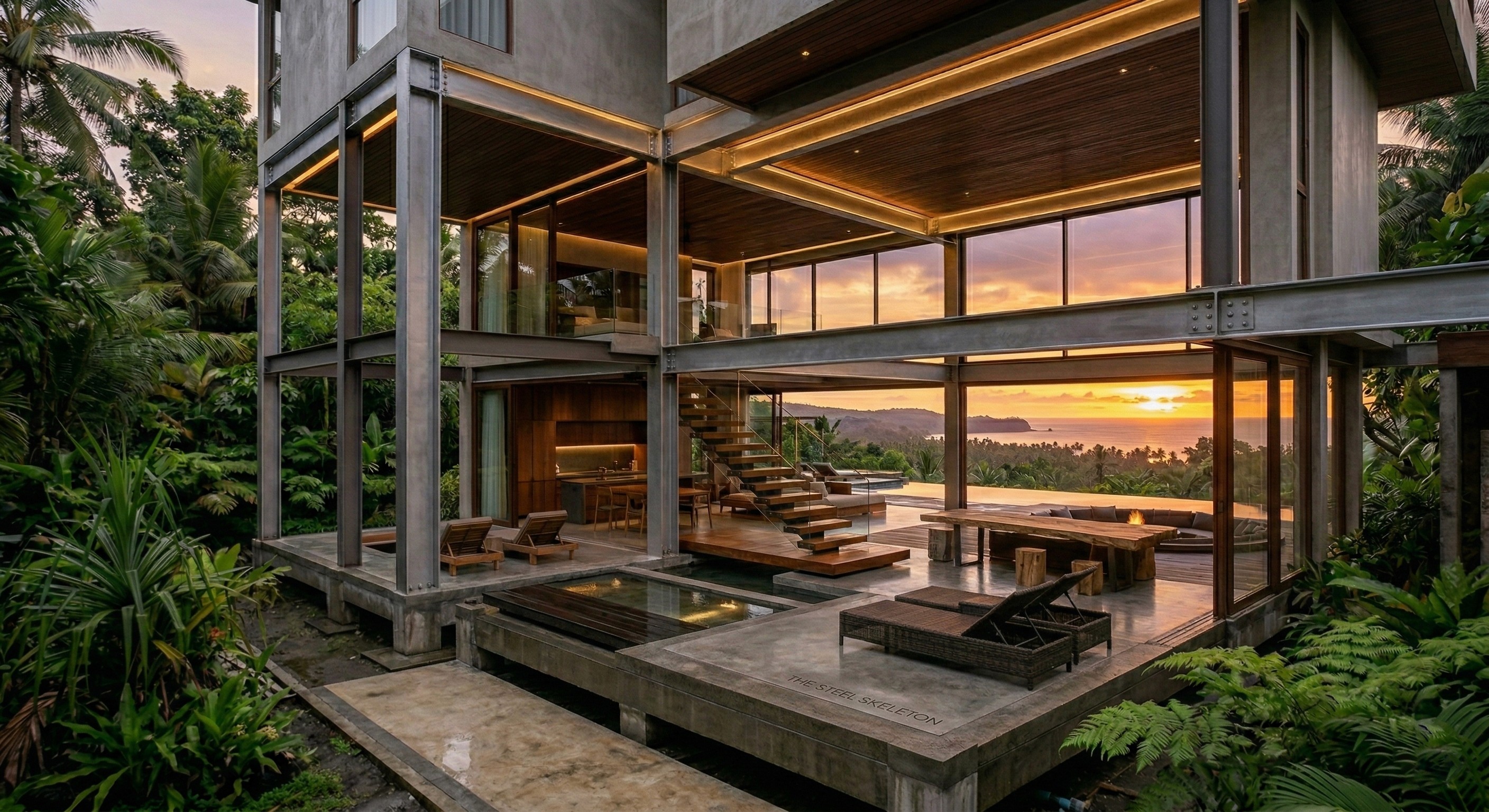
Structural Freedom in Modern Design
Contemporary villa architecture emphasizes openness and uninterrupted visual flow. Traditional concrete structures often require thicker support elements that restrict interior flexibility.
Steel framing distributes loads efficiently across longer spans, allowing greater design freedom. This is particularly valuable when integrating floor-to-ceiling glazing systems.
The result is spatial continuity supported by structural intelligence.
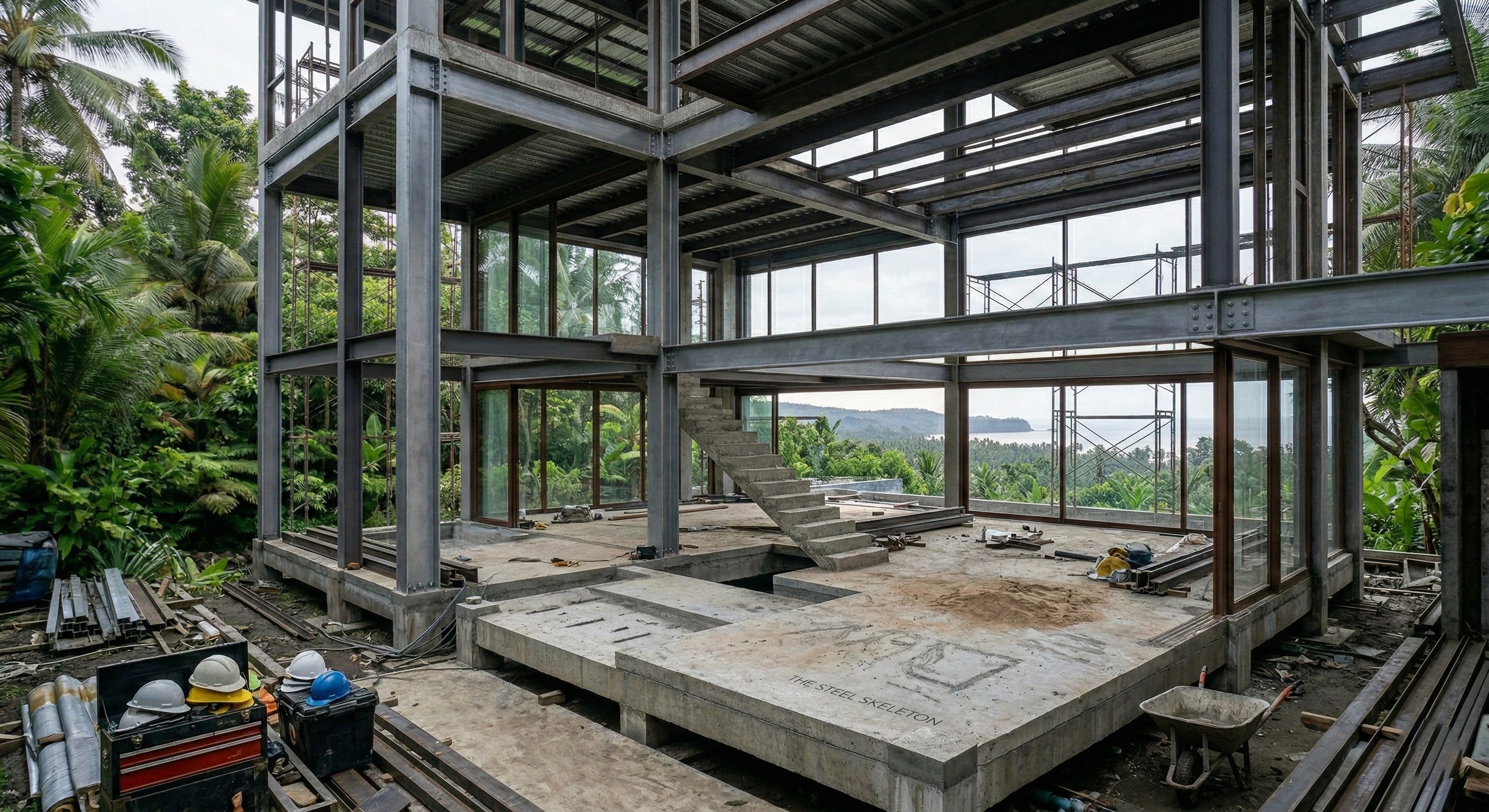
Wide spans reduce interior structural obstruction.
“Space expands when structure adapts.”
Enabling Modern Tropical Design
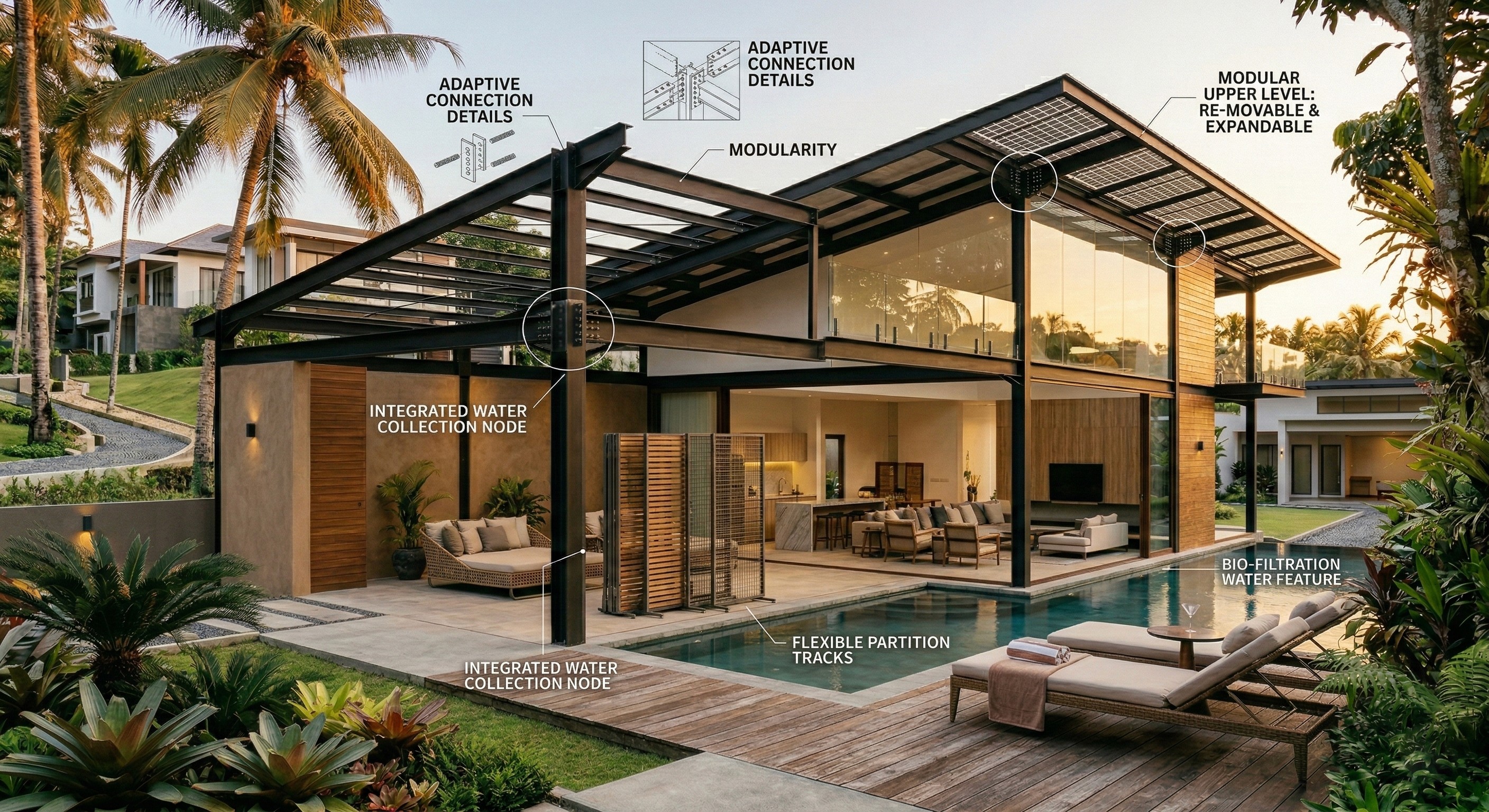
Open-plan architecture is no longer a design trend — it has become a market expectation in premium villa development. Achieving uninterrupted interior space requires structural systems capable of carrying loads across greater distances without excessive support points.
Expanded considerations include:
Reduction of Load-Bearing Interior Walls
Traditional reinforced concrete often requires intermediate supports. Steel beams allow redistribution of loads across longer spans, eliminating unnecessary vertical elements.
Support for Floor-to-Ceiling Glazing
Large glass panels introduce wind loads and structural deflection considerations. Steel framing provides the strength-to-weight ratio necessary to support expansive glazing systems.
Improved Spatial Flexibility
Fewer structural constraints allow future layout adjustments without major structural intervention.
Cleaner Architectural Lines
Slimmer beam profiles enable minimalistic aesthetics aligned with contemporary tropical villa design.
Optimized Indoor-Outdoor Transition
Wide openings improve airflow and visual continuity between interior and landscape.
Technical Methods Behind Open Layout Performance
Creating large open spans requires precise engineering calculations and fabrication standards.
Technological strategies include:
High-Strength Structural Steel Grades
Advanced steel compositions increase load capacity without increasing material mass.
Moment-Resisting Frame Systems
Engineered joint design enhances lateral stability while maintaining openness.
Deflection Control Modeling
Finite element analysis ensures floor and roof deflection remain within acceptable comfort standards.
Wind Load Simulation for Large Openings
Digital modeling evaluates structural performance under extreme weather conditions.
Hybrid Integration with Secondary Support Systems
Steel primary structure can integrate with lightweight secondary framing to support façade systems.