a
News
Structural Considerations for Bali’s Humid Environment
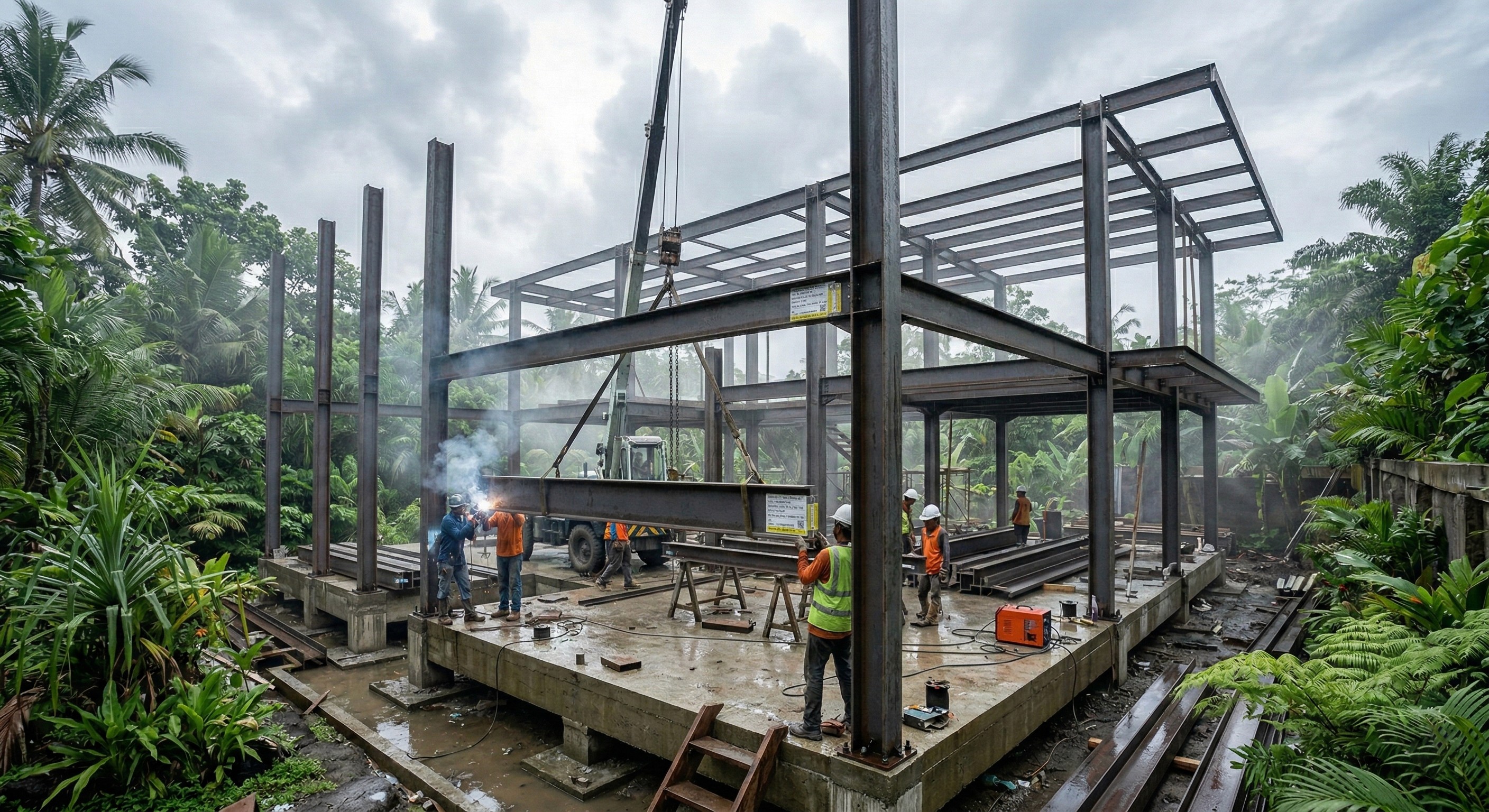
Building for Long-Term Tropical Performance
Humidity accelerates material deterioration when improper systems are used. Concrete curing inconsistencies, moisture retention, and surface cracking are common risks.
Steel systems, when properly treated and protected, provide controlled structural behavior in fluctuating climates. The reduction of curing dependency eliminates weather-related delays.
Ventilated structural designs further enhance airflow integration — a core requirement for tropical villas.
Structural logic must align with environmental reality.
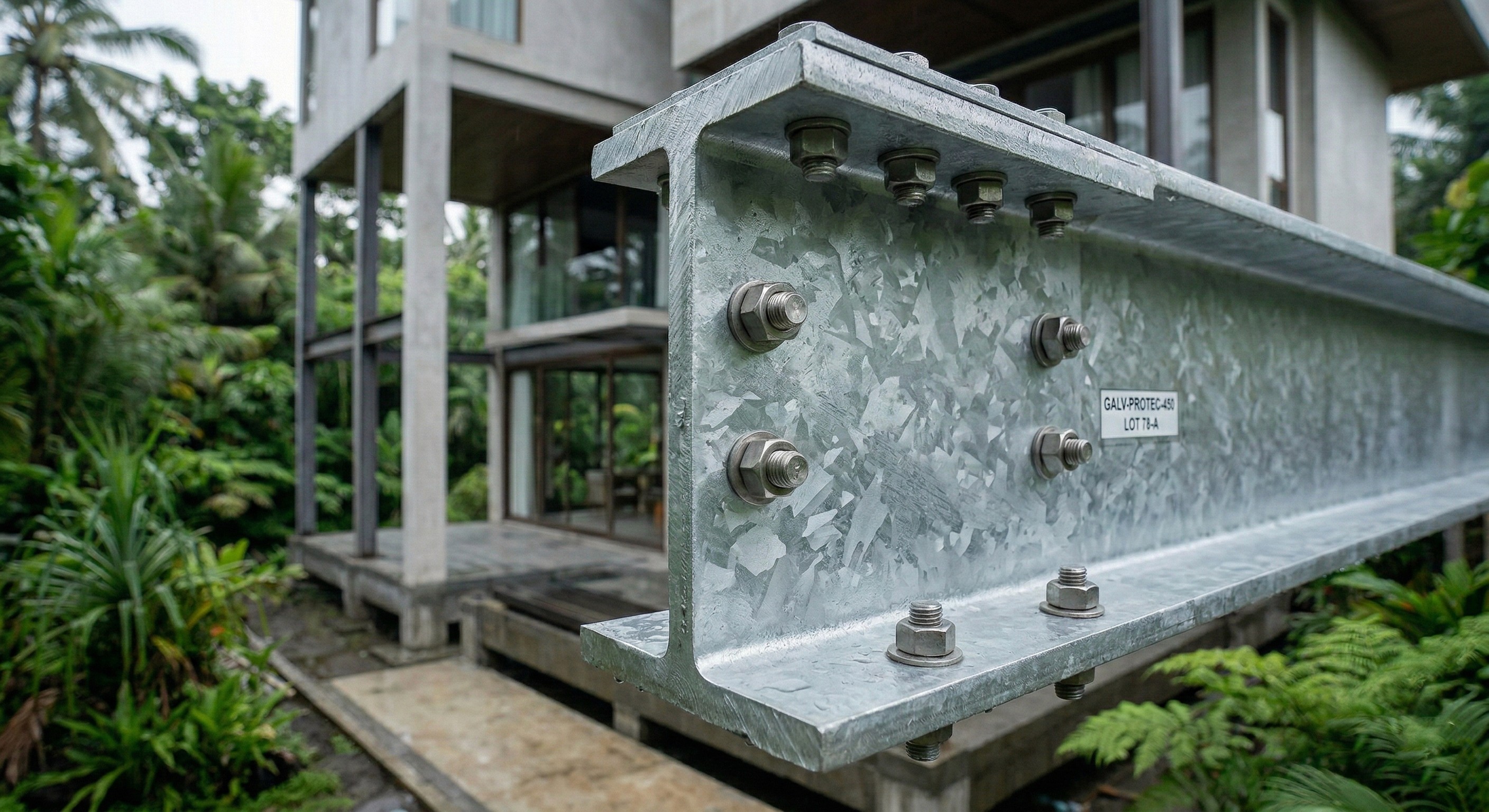
Protective treatments enhance steel durability in humid climates.
“Climate is not a challenge when structure is engineered correctly.”
Understanding Environmental Stress Factors
Bali’s tropical climate presents a combination of high humidity, seasonal rainfall, temperature fluctuation, and saline coastal air exposure. These conditions directly influence structural performance over time.
Key structural considerations include:
Moisture Exposure Management
Prolonged exposure to humidity can lead to surface degradation, micro-cracking, and long-term material fatigue in improperly treated systems. Structural materials must be selected and protected to minimize moisture absorption and corrosion risk.
Curing Sensitivity in Concrete Systems
Concrete requires controlled curing conditions to achieve optimal strength. In tropical climates, excessive moisture or unexpected rainfall during curing may compromise consistency and increase surface defects.
Structural Weight vs Soil Response
Heavy structural systems place greater demand on foundations. In regions with variable soil stability, reducing overall structural mass improves long-term performance and reduces differential settlement risk.
Ventilation Integration
Modern tropical villas require passive airflow strategies. Structural systems must allow architectural openness without compromising load distribution.
Thermal Expansion Control
Daily temperature variation influences material expansion and contraction. Structural systems must account for these cycles through engineered connection strategies.
Engineering Methods That Improve Longevity
Steel-based structural systems, when properly engineered and protected, can offer predictable performance in humid environments.
Technological solutions include:
Hot-Dip Galvanization
Protective zinc coating applied to steel components significantly increases resistance to corrosion in high-humidity environments.
Epoxy and Polyurethane Coatings
Multi-layer protective systems provide additional environmental shielding for exposed structural elements.
Bolted Structural Connections
Mechanical connections reduce reliance on site welding, improving consistency and minimizing weather-dependent installation risks.
Precision Fabrication in Controlled Facilities
Off-site manufacturing ensures consistent quality standards and reduces variability introduced by tropical site conditions.
Drainage-Integrated Structural Design
Intelligent detailing prevents water accumulation at structural junctions, extending service life and reducing maintenance requirements.