a
News
Material Efficiency and Waste Control in Modern Builds
Efficiency as a Sustainability Strategy
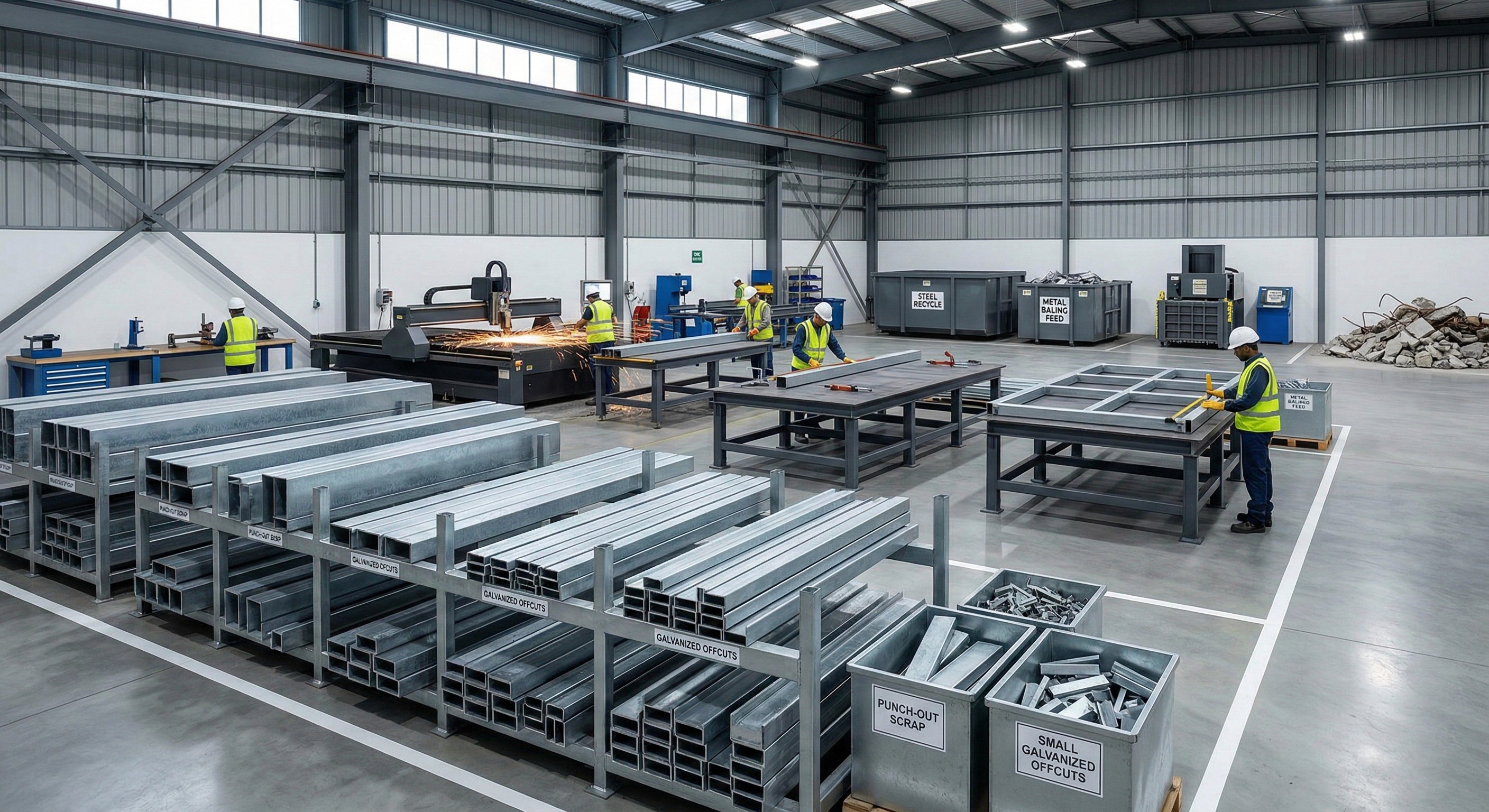
Material waste directly increases environmental impact and project cost. Steel systems, when integrated with digital planning and prefabrication, significantly reduce off-cuts and excess usage.
Optimized logistics minimize redundant transportation and site clutter. Controlled fabrication environments improve yield ratios and reduce disposal needs.
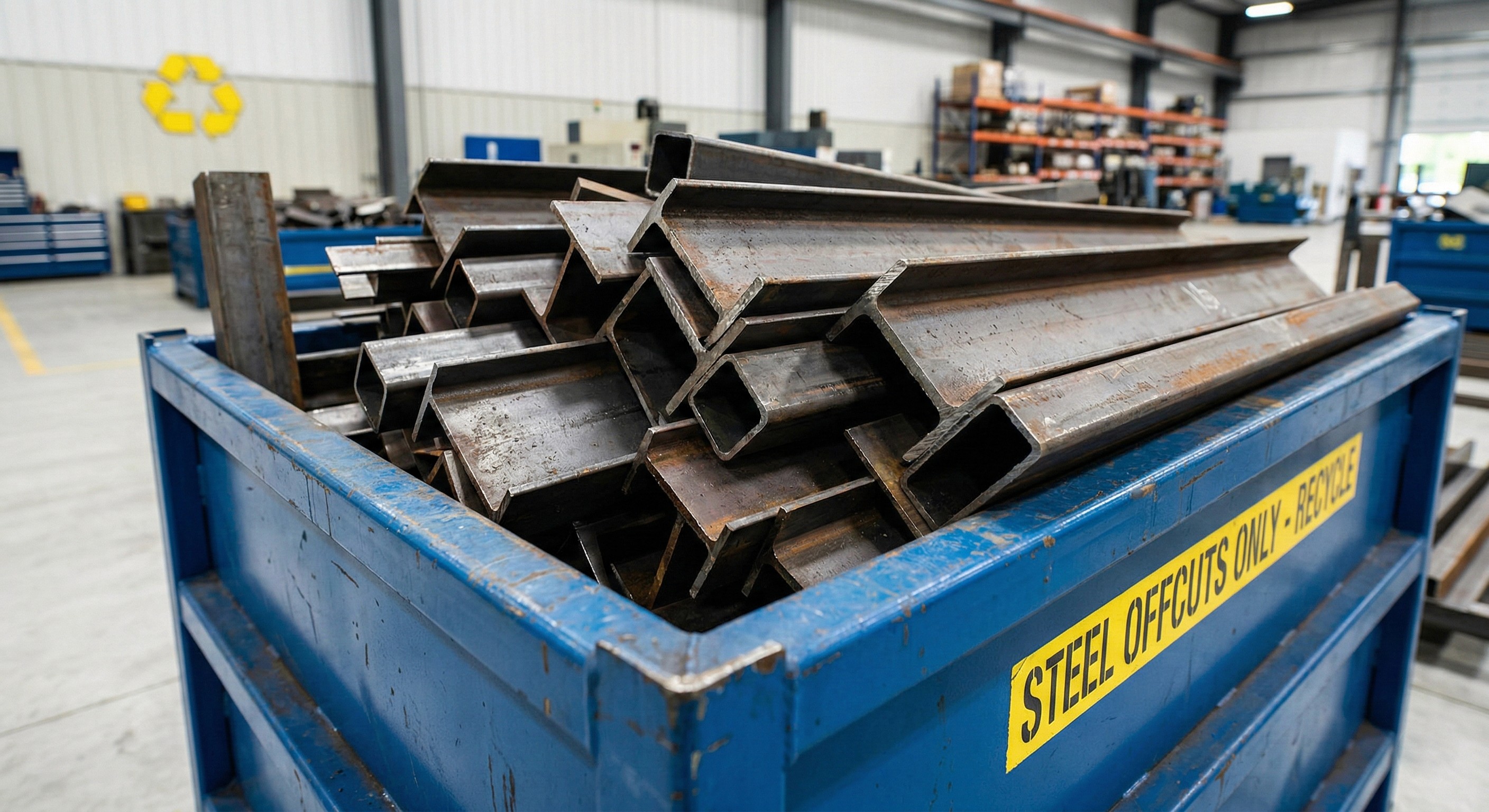
Material efficiency reduces environmental and financial cost.
“Efficiency is measurable sustainability.”
Material Optimization Reduces Structural Waste
In modern construction, sustainability is not only measured by the material type but by how efficiently that material is used. Steel systems, when integrated with digital modeling and prefabrication workflows, allow engineers to calculate exact material quantities before production begins.
This precision reduces over-ordering, unnecessary offcuts, and site-based adjustments. In contrast, traditional construction methods often rely on excess material to compensate for variability.
Material efficiency directly impacts:
Reduced landfill contribution from surplus concrete and formwork
Lower embodied carbon per structural square meter
Decreased on-site contamination and debris accumulation
Improved cost control through yield optimization
Faster site cleaning and safer work environments
Sustainability, in this context, becomes a measurable operational outcome rather than a marketing statement.
Technological Points — Systems That Enable Sustainable Execution
Modern steel-based villa construction leverages technological systems that significantly improve environmental performance.
Key integrated technologies include:
CNC-Driven Fabrication
Computer-controlled cutting reduces raw material waste by optimizing beam layout and minimizing scrap generation.
Digital Quantity Forecasting
Structural modeling software calculates exact tonnage requirements, reducing overproduction.
Recyclable Structural Components
Steel remains one of the most recyclable construction materials globally, supporting circular economy strategies.
Controlled Prefabrication Environments
Factory production prevents site contamination and ensures waste is captured and processed systematically.
Logistics Optimization Platforms
Coordinated delivery scheduling reduces transportation frequency and fuel consumption.
Efficiency becomes structural, logistical, and environmental simultaneously.